
Okay, so you want to build something that lasts, doesn’t wreck the planet, and won’t cost you a fortune in maintenance every five years ? Smart. I’ve been digging into sustainable materials for a while now, and honestly, some of these options surprised me. Not all “green” materials are created equal, you know ? Some perform incredibly well, others… well, let’s just say the marketing is better than the reality.
Here’s the thing : sustainability sounds great on paper, but what about in 2055 when your walls are still standing and your neighbor’s conventional build is already showing its age ? That’s what we’re really talking about here. I’ve compared notes with builders, checked real project data (like what you’ll find at https://www.federationgrandsud.com for instance), and I’m giving you six materials that actually hold up. Performance, cost, maintenance over three decades-the whole picture.
1. Cross-Laminated Timber (CLT): The Overachiever
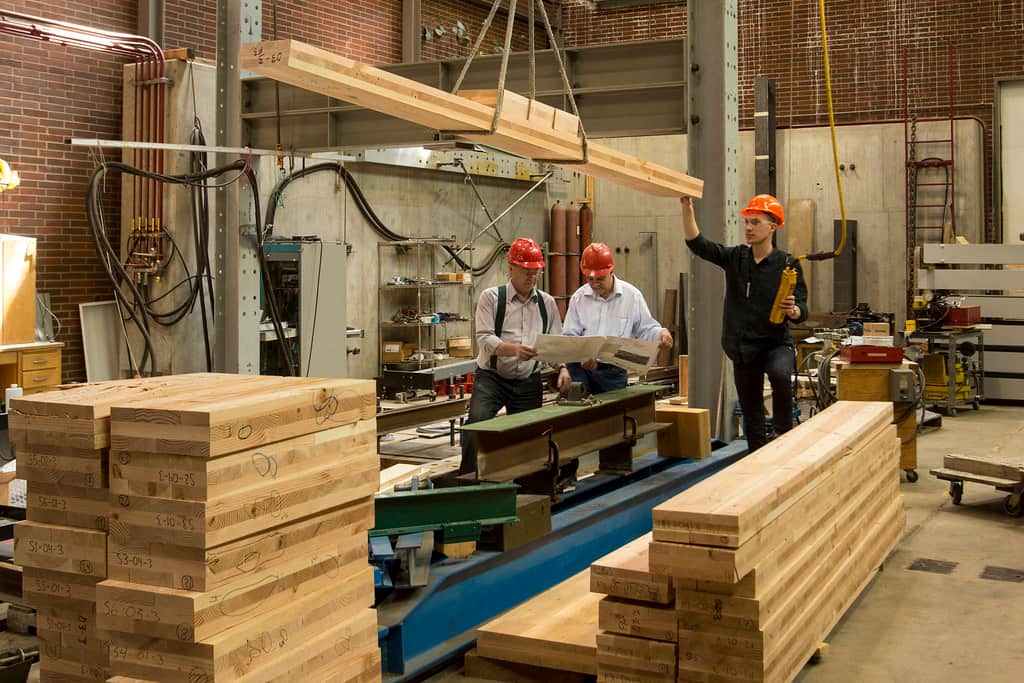
Cross-laminated timber is basically plywood on steroids. Layers of wood stacked perpendicular, glued together under massive pressure. And frankly ? It’s a game-changer.
Performance : CLT is shockingly strong. We’re talking about buildings up to 18 stories tall made from wood. It has excellent seismic resistance-better than concrete in many cases. Thermal performance is solid too, naturally insulating. Fire resistance ? Yeah, that was my first question too. Turns out, thick CLT chars on the outside but maintains structural integrity way longer than steel (which just melts).
Cost : Here’s where it gets interesting. Initial material cost runs about $450-$650 per cubic meter, which seems high. But construction time is 20-30% faster than conventional methods. Less labor, lighter foundation requirements because it weighs less. Over 30 years, you’re looking at minimal maintenance-maybe $2-3 per square foot total. Not bad.
Maintenance : Almost none, honestly. Keep it dry during construction, protect it from prolonged moisture exposure, and you’re golden. I’ve seen CLT buildings from the early 2000s that still look brand new.
The catch ? You need architects and builders who actually know how to work with it. Not every contractor does.
2. Rammed Earth : Ancient Tech, Modern Results
Rammed earth is literally compressed dirt. Sounds primitive, right ? It’s not.
Mix soil, gravel, clay, and a stabilizer (usually 5-10% cement), then compress it in forms. The walls end up being these beautiful, striated masses that regulate temperature like nothing else.
Performance : Thermal mass is off the charts. These walls absorb heat during the day, release it at night. I’ve been in rammed earth homes in Arizona where it’s 110°F outside and comfortably cool inside-no AC running. Compressive strength rivals concrete. Durability ? There are rammed earth structures in China that are 700 years old.
Cost : Material cost is low-basically dirt cheap (sorry, had to). But labor is intensive. Expect $120-$200 per square meter for the walls themselves. Over 30 years though ? Maybe $500 total maintenance for an entire house. These things just don’t fail.
Maintenance : Seal the surface every 10-15 years if you want. That’s it. No painting, no replacing, no rot, no termites. The simplicity is kind of beautiful.
One thing : you need the right soil composition. Not every site works. Test your soil first.
3. Recycled Steel : Surprisingly Green
Yeah, steel. Hear me out.
Using recycled steel instead of virgin steel cuts energy consumption by 75%. And steel is infinitely recyclable-same piece can be melted down and reused forever without losing strength.
Performance : Structural strength is unmatched. Termite-proof, fire-resistant, won’t warp or rot. Seismic performance is excellent. The thermal bridging issue is real though-steel conducts heat, so you absolutely need proper insulation.
Cost : Recycled steel framing costs about 10-15% more upfront than wood framing, maybe $15-20 per square foot. But it doesn’t shift, crack, or settle. Foundation repairs ? Not happening. Over 30 years, maintenance is minimal-mainly just checking connections and fasteners. Maybe $1,000-$1,500 total for a typical house.
Maintenance : Galvanized or coated steel basically maintains itself. In coastal areas, you’ll want to inspect for corrosion every few years, but inland ? Forget about it.
The weight is an advantage here-stronger structure, better wind resistance. I’d choose this for hurricane or tornado zones without hesitation.
4. Hempcrete : The Weird One That Works
Hempcrete is hemp fibers mixed with lime binder. It’s not structural-you still need a frame-but as insulation and wall infill, it’s fascinating.
Performance : Carbon negative. The hemp actually absorbs more CO2 during growth than the lime binder releases during production. Insulation value is good (R-2 to R-2.5 per inch), moisture regulation is excellent-it breathes, preventing mold. Pest resistant too.
Cost : More expensive than conventional insulation, around $100-$150 per square meter installed. But it lasts. And I mean lasts. No degradation, no settling, no performance loss. Over 30 years, zero maintenance costs for the hempcrete itself.
Maintenance : None. Seriously. It actually gets stronger over time as the lime continues curing. Might need to refresh exterior lime plaster every 15-20 years, but that’s cheap.
The downside ? Limited availability and higher upfront cost. But if you can source it locally, it’s worth considering. Plus, you’re basically locking carbon into your walls forever. Kind of cool.
5. Bamboo : Not Just for Pandas
Structural bamboo is having a moment, and honestly, it deserves it.
Bamboo grows to harvest size in 3-5 years versus 20-50 for trees. Tensile strength rivals steel. It’s being used for everything from flooring to structural beams.
Performance : Incredibly strong for its weight. Flexible, which makes it excellent in earthquake zones. Natural pest resistance (though treatment helps). The engineered bamboo products-laminated bamboo beams and panels-perform as well as hardwoods.
Cost : Bamboo flooring runs $3-8 per square foot. Structural products are pricier, maybe $15-25 per square foot. But it’s renewable, fast-growing, and increasingly available. Maintenance over 30 years is similar to hardwood-refinish floors every 10 years or so, maybe $3-5 per square foot total.
Maintenance : For flooring, treat it like hardwood. For structural elements, protect from prolonged moisture. In dry climates, bamboo is nearly indestructible. In humid areas, proper treatment and ventilation are essential.
Quality varies wildly between suppliers though. You want reputable sources with proper treatment and certification. Don’t cheap out here.
6. Recycled Concrete Aggregate (RCA): Old Concrete, New Life
Taking demolished concrete, crushing it, and using it as aggregate in new concrete. Simple, effective, sustainable.
Performance : When properly processed, RCA performs nearly identically to virgin aggregate. Compressive strength is comparable-maybe 5-10% lower, which is negligible for most applications. Durability is proven ; we’ve got decades of real-world data now.
Cost : Here’s where it shines. RCA typically costs 20-30% less than virgin aggregate. For a foundation or driveway, that’s significant savings. A typical residential foundation might save you $1,500-$3,000 using RCA. Maintenance ? It’s concrete. Seal it every few years, fix minor cracks. Same as conventional concrete.
Maintenance : Standard concrete maintenance applies. Maybe $0.50-$1 per square foot over 30 years for sealing and minor repairs. Not exciting, but effective.
The environmental win is huge though-every ton of RCA used saves a ton of virgin aggregate extraction. Plus, you’re diverting waste from landfills.
So What Should You Actually Choose ?
Look, it depends on your project. I know, I know-that’s the answer nobody wants. But it’s true.
For maximum performance and minimal maintenance : CLT or rammed earth. For budget-conscious sustainability : RCA and recycled steel. For carbon-negative building : hempcrete. For fast-growing renewable : bamboo.
Mix and match. Use RCA for your foundation, CLT for structure, hempcrete for insulation. Or go full rammed earth if you’ve got the right site and climate.
The point is : sustainable doesn’t mean sacrificing performance or breaking the bank anymore. These materials work. They last. And in 30 years, when conventional builds are showing their age, yours will still be solid.
Just do your homework. Find contractors who actually understand these materials. Get multiple quotes. And for the love of all things buildable, don’t skip proper installation. Even the best material fails if it’s installed wrong.
What’s your project looking like ? Which of these makes sense for you ?